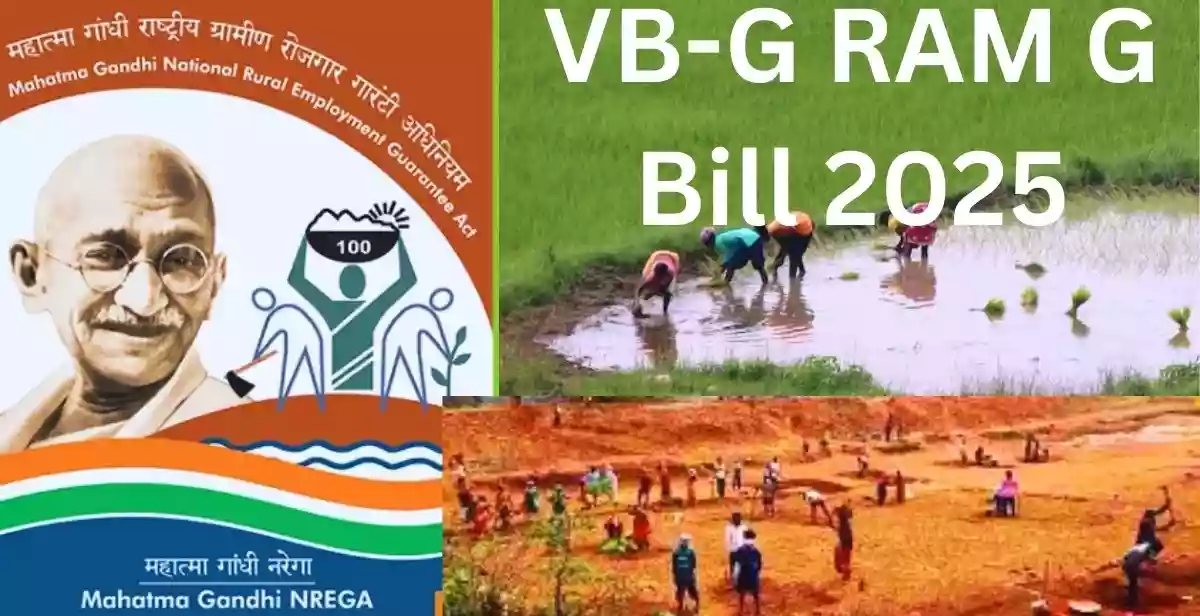
The central government introduced the Viksit Bharat - Guarantee for Rozgar and Ajeevika Mission (Gramin): VB G RAM G Bill, 2025 in Lok Sabha. The bill was tabled amid heavy backlash from Opposition parties, primarily Congress. However, putting aside the political rhetoric that has surrounded the proposed replacement of the MGNREGA, it is crucial to examine the operational and financial changes that the new VB-G RAM G Bill, 2025.
The legislation is framed around aligning a rural development framework with the national vision of Viksit Bharat @2047, but the core question for millions of rural households remains: will this overhaul deliver tangible benefits and a truly more robust employment safety net? Let's see the actual benefits and challenges of the new bill.
Core Benefits of VB-G RAM G:
- Increased Work Guarantee: The new bill mandates 125 wage employment days annually, a significant increase from MGNREGA's guaranteed 100 days.
- Faster Wage Payments: Wage payouts are mandated to be weekly or fortnightly at most, replacing MGNREGA's less stringent "within 15 days" requirement, ensuring quicker liquidity for workers.
- Improved Local Planning: The scheme mandates the preparation of Viksit Gram Panchayat Plans and integrates them with the PM Gati-Shakti National Master Plan for unified planning.
- Productive Asset Creation: The focus shifts to thematic infrastructure (e.g., water security, climate resilience, livelihood-related works), moving beyond general asset creation.
- Support for Farmers (Peak Season): The bill includes a statutory provision allowing states to notify up to a 60-day "pause window" during peak agricultural seasons, which helps mitigate farm labour shortages.
- Enhanced Transparency and Integrity: The new scheme includes a comprehensive governance ecosystem built on digital infrastructure. This involves AI-based fraud detection and GPS mobile-based monitoring, improving upon MGNREGA's basic geo-tagging. It also mandates twice-yearly social audits per Gram Panchayat, strengthening accountability.
Key Financial Challenge:
- Shift in Funding Structure: The new bill introduces a State cost-sharing for wages model. This is a major departure from MGNREGA, where the Centre bore 100% of the unskilled wage costs. The new split is 60:40 (Centre:State) for most states, and 90:10 for North-Eastern/Himalayan states/UTs.
- Budgeting Model Change: Funding shifts from an open-ended, demand-driven model to a Normative Allocation (budget-capped based on objective parameters).
- Other Challenges: States must ensure they can consistently meet their 40% share of the wage costs, or the guaranteed 125 days could be compromised.
.gif)














 West Bengal
 Bihar
Bihar Uttar Pradesh
 Jharkhand